Drive out on the nights that are actually dark.
Ostara reads the moon, the twilight and the cloud model for your sites and answers one question: how many usable hours tonight gives you.
Ostara reads the moon, the twilight and the cloud model for your sites and answers one question: how many usable hours tonight gives you.
Tonight
5h 31m
of astronomical dark
Cloud
4%
clearing after 22:00
Moon
18%
rises 04:12, low SE
Seeing
1.4″
steady jet stream
Drive
1h 12m
last 8 km unpaved
usable darkdark, but moonlit
Reads from
AEMET hourly cloud
GFS jet stream
Bortle sky brightness atlas
JPL ephemerides
Tonight, 26 July, read 40 seconds ago
22:41 to 04:12
clearing after 22:00
last 8 km unpaved
drive plus setup
Go. The widest window of the five nights, and the moon stays down until you are packing up.
22:34 to 04:32
thickening after 02:00
plus a 3 km walk
drive, walk, setup
Darker, and 27 minutes longer. Whether that pays for three extra hours in the car is the one call Ostara leaves to you.
22:41 to 04:12
clear all night
tarmac to the gate
drive plus setup
Clear, close, and two Bortle classes worse. Fine for narrowband tonight; wrong for the Milky Way you came for.
Nine nights in ten are not worth the drive. Ostara is about the tenth.
Every hour it re-reads four models for every site you saved, and most of the time the answer is no. That is the point: the value is in the nights it talks you out of.
iPhone, red-light mode after dark
Cabañeros gate · horizon
You draw the skyline once from the site. After that a target below it is not a target.
Alert
Dark starts 22:41, the drive is 1h 12m and polar alignment takes 25 minutes. One notification, not a sunset reminder.
Tonight vs the week
+1h 04m
More usable dark than the next best night. Tuesday is close and clear, if you would rather sleep.
Session log
Cloud came in at 03:12, 34 minutes earlier than the model said. Logged against the forecast so the next call is better.
Reads from
AEMET GFS Bortle JPL CopernicusSet up once, then it is a glance
Ostara is not another weather app. It answers one question: is tonight worth the drive. To do that it needs to know where you drive to.
Drop a pin, and Ostara measures what the sky is worth there: sky brightness, the horizon your ridge eats, and how long the last unpaved stretch takes in the dark.
3 sites saved · free plan
Every hour it re-reads cloud, jet stream and moon for each site, and turns them into one number you can compare: usable hours of astronomical dark.
Re-read hourly · last run 40 s ago
When a night clears your own bar, you get one notification with the time to be in the car: dark start minus the drive minus setup, not a generic sunset alert.
Tonight: leave at 21:05
Cabañeros · 26 Jul
The same axis as above, one row per target: the window where it clears your horizon and the sky is actually dark. Astronomical dark runs 22:41 to 04:12 tonight.
3 of 3 on the free plan
Clear to the south. The ridge eats anything under 12° to the north-east.
Darkest site you have, and the only one with a 3 km walk from the car park.
Madrid glows to the south-east. Fine for narrowband, wrong for broadband.
Bortle scale1 → 9
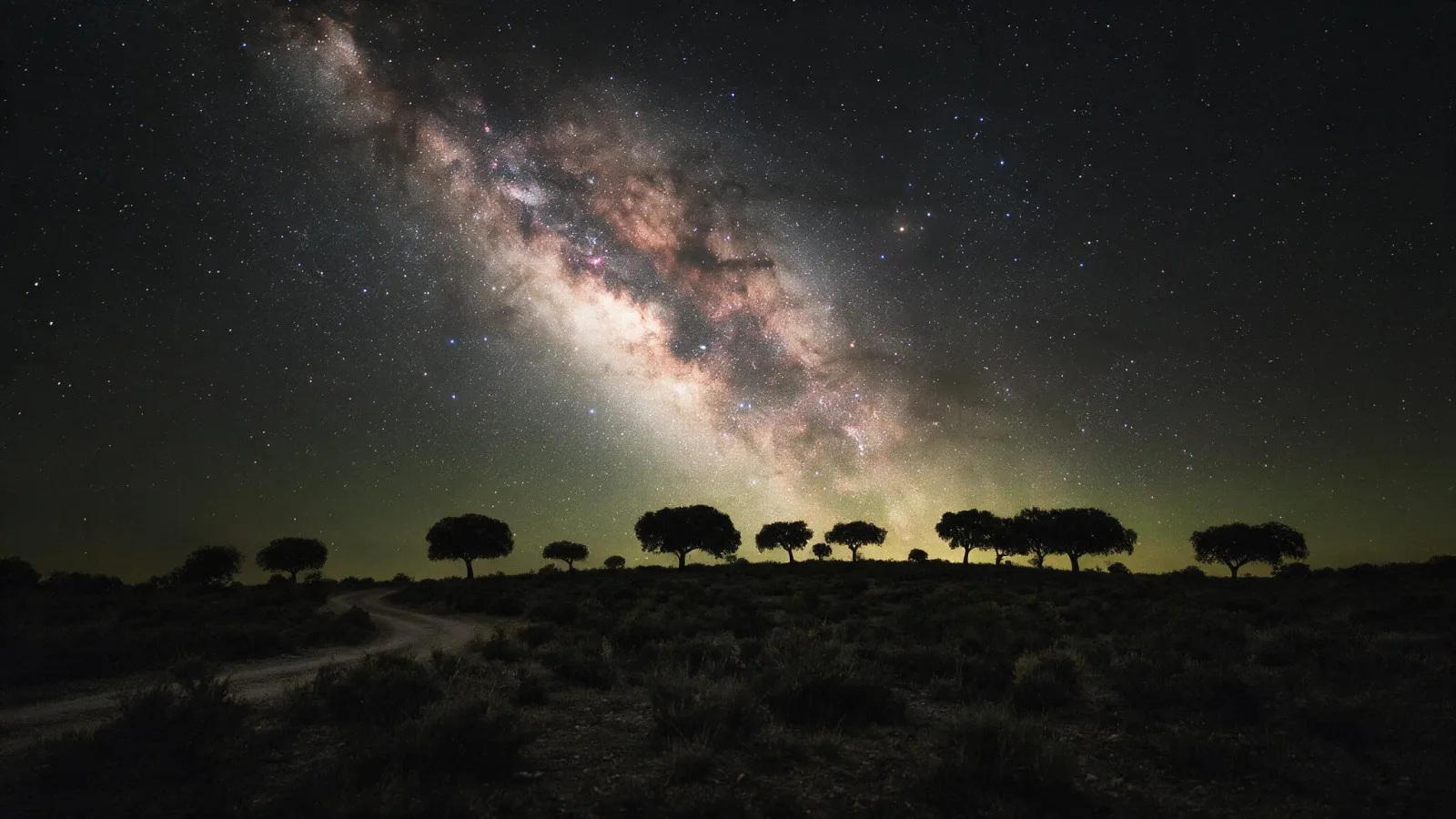
Class 1 is a sky where the Milky Way casts a shadow; class 9 is an inner-city street. Two of your sites sit at class 2, which is as good as mainland Spain gets.
No account needed to try it
Free
€0forever, one site
Plus
€4per month, cancel any time
Per subscriber, per month, at the current count. No ads, and the sites you save are never anyone else’s to sell.
Four questions that arrive every week. If yours is not here, the last link in the footer reaches one person and gets answered the same night.
Yes, on Plus. The night you were alerted for is cached before you leave: the forecast, the target windows and the offline map tile for the last unpaved stretch. The free plan needs a connection to refresh.
AEMET’s hourly model for the Iberian peninsula, with GFS for the jet stream that decides your seeing. Where the two disagree, Ostara shows both rather than averaging them into a number nobody can check.
A weather app tells you it is clear at 22:00. It does not know that the moon is up until 04:12, that your ridge blocks the target until midnight, or that the last 8 km take 20 minutes in the dark. Those three are the whole difference between a clear night and a usable one.
Not yet. It is one person writing this, and the honest answer is that the iOS version has to pay for itself first. The site here works on any phone in a browser.